Why I Wrote Mathatar
Why I Wrote a Story Where Maths Holds Reality Together
Mathatar began with a simple question:
What if maths wasn’t just something we learn at school but was one of the things holding reality together?
That question has stayed with me for years.
Long before Mathatar became a book, it began as an idea for a game. Back in 2016, I was developing a maths training programme and looking for ways to help children experience maths differently. I did not want maths to feel like a cold subject full of right or wrong answers and red pen, with exclamation marks. I wanted it to feel active. Immersive. Human. Full of challenge, discovery and consequence.
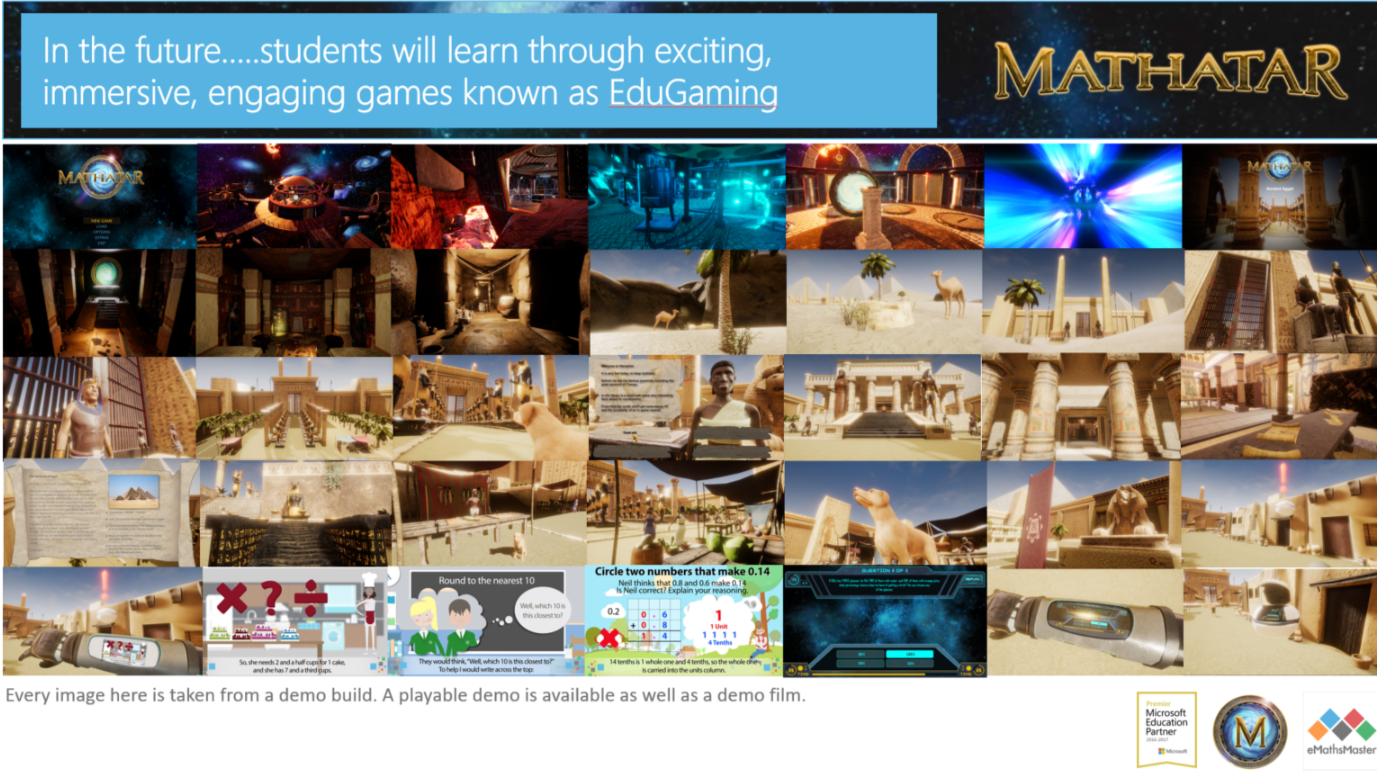
Mathatar started off as an educational game.
My own personal journey with maths could be described as easy, easy, easy, total disconnection (sin, cosin and tangent), hard work, eventual reconnection and back to aha, got it! Or, top set, top set, top set, bottom set, then climb back to get my O-level eventually. So, I have an understanding of how maths can frustrate pupils.
The original version of Mathatar was imagined as a gamified learning world. A place where children could step into mathematical ideas rather than simply be taught them.
There were visuals. Videos. Characters. Concepts. Even a playable demo.
The business behind that early vision sadly did not survive. But the idea did.
It never really left me.
For years, Mathatar sat somewhere in the background of my mind. A persistent thought that maths could be experienced as a world, not just studied as a subject. A world where numbers, patterns, measurement, shape and logic mattered because the story itself depended on them.
Then, a few months ago, I woke at around three in the morning with one of those thoughts that arrives fully formed after a fevered dream that I don’t remember.
Mathatar was not waiting to become a game.
It was waiting to become a book.
More than that, it was waiting to become a series.
That moment changed everything.
The old game world became a story world. The learning journey became Maya’s journey. The mathematical challenges became part of a much bigger adventure about courage, history, family, confidence and the strange hidden structures that hold everything together.
The idea behind Mathatar
In Mathatar, maths is not just a lesson on a timetable. It is not something that exists only in exercise books or classrooms.
It is the framework beneath reality.
Numbers. Patterns. Measurement. Shape. Proof. Order.
These are not just topics to be revised. They are load-bearing parts of existence.
So when maths begins to slip, reality slips with it.
A digital clock loses digits.
A shopping list changes meaning.
A decimal point moves.
A small error becomes something much more frightening.
I loved the idea that a child could notice the world going wrong in tiny, almost ordinary ways, and gradually realise that these little mathematical distortions are not random mistakes.
They are warnings.
Why maths?
I did not want to write a book that simply said, “maths is useful.”
Children hear that all the time.
“You’ll need this one day.”
“It’s important.”
“You use it more than you think.”
“It will help you get a job.”
All of that may be true, but it does not always make maths feel alive.
Stories can do something different.
A story can take an idea that feels intimidating and give it danger, humour, mystery, friendship and emotional meaning. It can let a reader approach something difficult without feeling as though they are being tested.
That was important to me.
Because maths is not only about answers. It is about how human beings learned to make sense of the world.
How many?
How far?
How long?
How much?
What changed?
What stayed the same?
How do we know something is true?
Those questions are not dry. They are ancient. They are practical. They are creative. They are deeply human.
They are the beginning of civilisation.
I mean, if we hadn’t discovered maths, how would we have computers? In fact, how would we have a civilisation at all?
The business ended. The idea didn’t.
When the original maths software project failed, it would have been easy to let Mathatar disappear with it. Move on, forget all about it.
But some ideas do not behave like that.
Some ideas keep tapping you on the shoulder. My collection of Mathatar promotional T-shirts, became pyjama tops.
The more I thought about it over the years, the more I realised that the heart of Mathatar was never really the format. It was not dependent on being a game, a programme, an app or a piece of training software.
The heart of it was always this:
Can we help children feel that maths belongs to them?
Not just to the naturally confident.
Not just to the quick calculators.
Not just to the children who always put their hands up first.
To everyone.
The child who feels lost.
The child who has quietly decided they are “not a maths person.”
The child who understands more than they think, but has lost confidence.
The child who needs a different doorway in.
That is what Mathatar was always trying to become.
The book gave me that doorway.
A story first, maths second
One of the most important decisions I made was that Mathatar had to work as an adventure first.
Maya does not step through a portal because she wants a maths lesson.
She steps through because something is wrong. Because someone she loves is in danger. Because her Grandfather’s dog, Fella, has charged into the impossible and she has no choice but to follow.
That matters.
Children are very good at spotting when a story is secretly a worksheet in disguise.
I did not want that.
I wanted ancient cities, strange machines, danger, friendship, humour, fear and discovery. I wanted readers to care about Maya, Aya, Fletcher, Grandad and Fella before they realised how much mathematical thinking was woven through the story.
The maths had to matter because the characters mattered.
It had to be part of the adventure, not a pause in the adventure. However, I also wanted to share some of the wonder of history, some of the wonder of how maths has shaped our world.
Confidence, not cleverness
At its heart, Mathatar is also about confidence.
Not the loud kind.
Not the kind that says, “I am brilliant at everything.”
The quieter kind.
The moment a child thinks:
I might be able to understand this. I want to understand this.
That is a pivotal moment in a child’s life. If I can facilitate that, I’ll be a very happy man.
Maya is not written as someone who has all the answers. She is brave, but unsure. Curious, but often overwhelmed. She has to notice things, ask questions, make mistakes, listen, adapt and keep going.
That felt important to me.
Because many children do not need to be told they are geniuses. They need to be shown that they are allowed to think.
Allowed to struggle.
Allowed to be confused.
Allowed to get it wrong.
Allowed to work things out.
Allowed to ask questions.
Maths can become frightening when it feels like a place where only the naturally gifted belong. But maths did not begin that way.
It began with people trying to understand life.
Counting. Measuring. Comparing. Recording. Predicting. Building. Sharing.
That belongs to all of us.
Why ancient history?
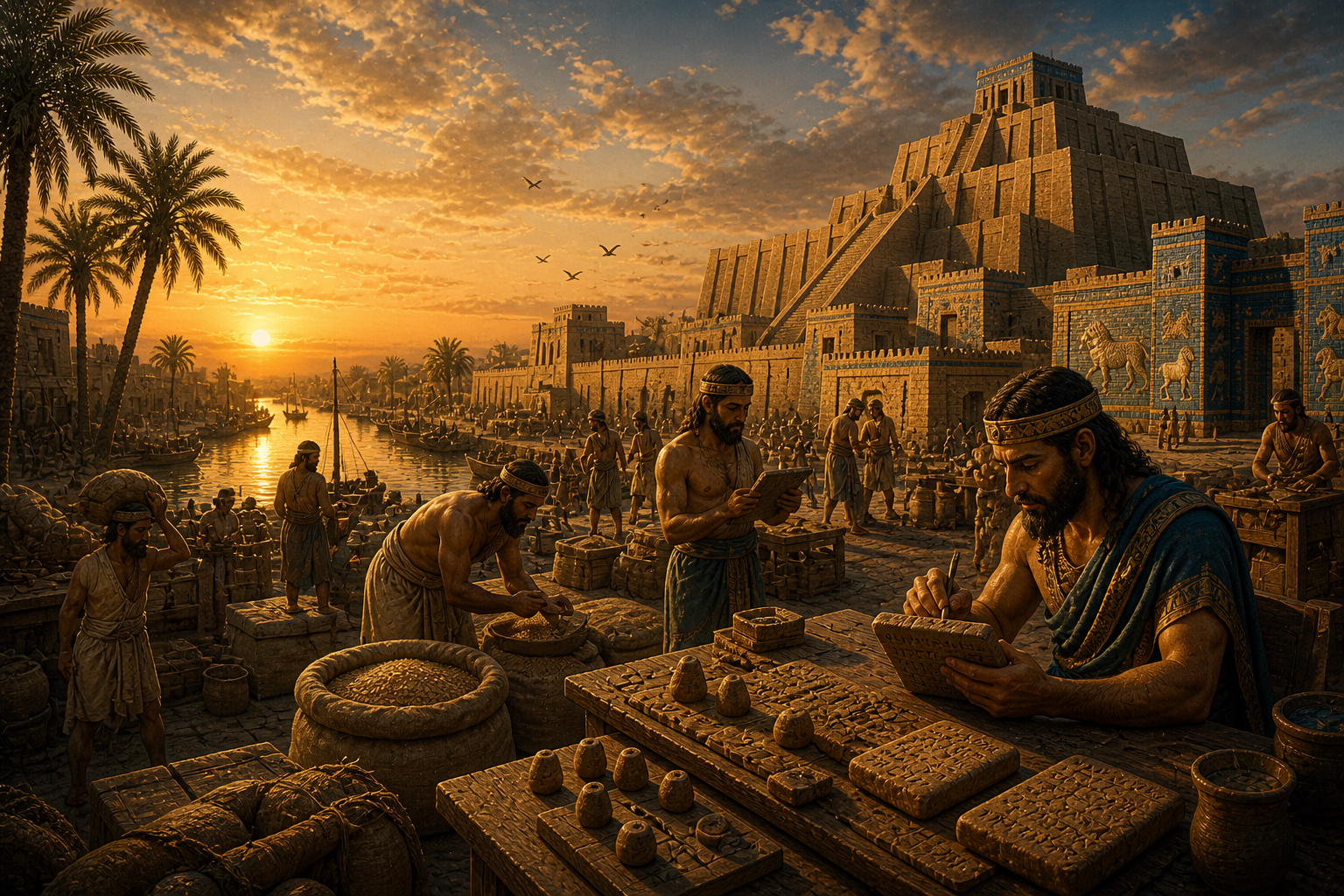
In ancient Ur, maths was sexagesimal.
The first Mathatar story reaches back into the ancient world because I wanted readers to see maths as part of the human journey.
Before calculators, screens, whiteboards and exams, there were people trying to solve real problems.
How much grain is in the storehouse?
How do we divide land?
How do we measure time?
How do we build something that will stand?
How do we record what matters?
How do we pass knowledge on?
That is not boring.
That is survival.
That is society beginning to organise itself. It is human beings looking at the world and saying, “There must be a way to understand this. To keep track.”
By sending Maya into the past, the story allows her to see mathematical ideas before they became school topics. She encounters them as living ideas, shaped by need, imagination and discovery.
Every symbol, method and concept we use today has a history.
Someone counted.
Someone noticed a pattern.
Someone made a mark.
Someone asked a better question.
Mathatar grew from my fascination with that long human journey.
Making maths feel magical without making it fake
The challenge was to make maths feel magical without pretending that maths is magic.
In Mathatar, the fantasy sits around the mathematics. But the wonder comes from the truth underneath it.
A number can change meaning.
A pattern can reveal something hidden.
A measurement can protect people.
A proof can hold an idea in place.
A small mistake can have enormous consequences.
That is already extraordinary.
The story simply turns the volume up.
It asks what would happen if the principles behind maths were visible. What would happen if someone tried to steal them? What would happen if a child had to defend them?
That gave me the world of Mathatar: a place where mathematical ideas are not decorations, but foundations.
For the child who thinks maths is not for them
The reader I often think about is the child, or adult, who has quietly decided that maths is not for them.
Not because they are incapable.
But because, somewhere along the line, they had too many moments of feeling embarrassed, lost, rushed or left behind.
I know a story cannot fix that on its own.
But a story can soften a wall.
It can create a new doorway.
It can allow you to approach an idea without fear. It can make you curious before you feel judged. It can demonstrate that not understanding something immediately is not failure. It is the beginning of discovery.
If a reader finishes Mathatar and thinks, I never realised maths could be like that, then the book has done something worthwhile.
If they go one step further and think, Maybe I can understand more than I thought, then it has done exactly what I hoped.
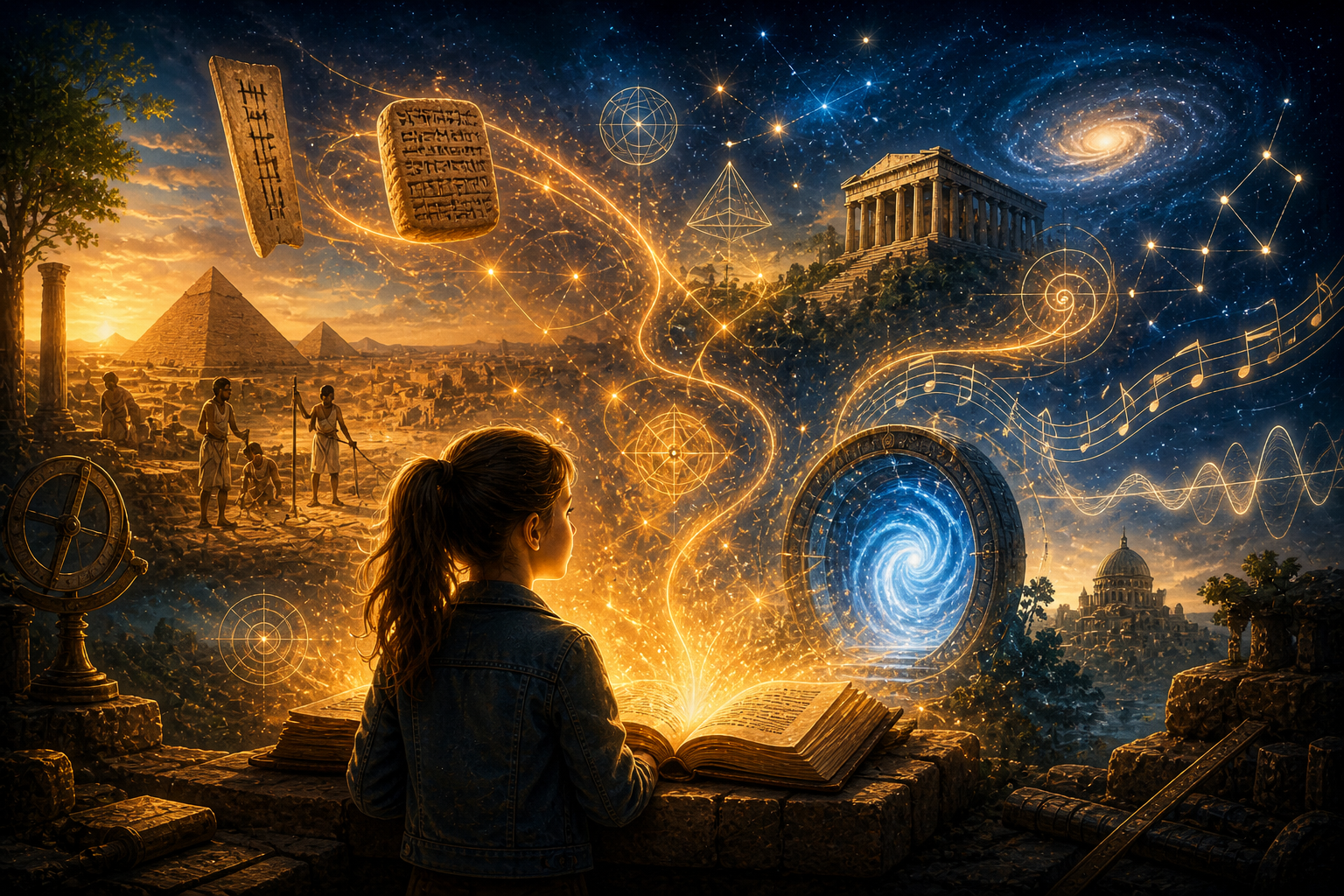
Maths can be a magical gateway
Why I had to write it
For years, Mathatar existed as an unfinished idea from another version of my life.
A game.
A training concept.
A world that almost happened.
But perhaps it needed time.
Perhaps I needed time.
When I finally saw it as a book series, everything clicked into place. The idea had not disappeared because it was never only about a product or a business. It was about a belief.
That people can engage deeply with big ideas when those ideas are wrapped in story, character and consequence.
That maths is not cold.
That confidence can be rebuilt.
That learning can feel like discovery.
That the history of human thought is full of wonder.
And that sometimes, the thing you thought had failed was simply waiting for its true form.
That is why I wrote a story where maths holds reality together.
Because in many ways, maths does hold our understanding of reality together.
It helps us describe the stars, build bridges, follow music, measure medicine, design cities, understand nature and ask better questions.
Not lifeless.
Astonishing.
Human.
And that is where Mathatar begins.